Overview
During the spring of 2013 when I was completing my doctorate I accepted a role as an Instructional Designer at the Massachusetts Institute of Technology (MIT). In this role, I was a member of the MIT-Skoltech (SKT) program and tasked with contributing to the development of a new graduate engineering curriculum as part of building a new brick-and-mortar university in Moscow, Russia. In retrospect, it was an idealistic and ambitious project. But it was the vision of the then Russian President Medvedev to build a sister university to MIT and help retain Russian talent in Russia. And for many of my American colleagues, it was driven by an optimism to put the Cold War sentiment from our youth in the past.
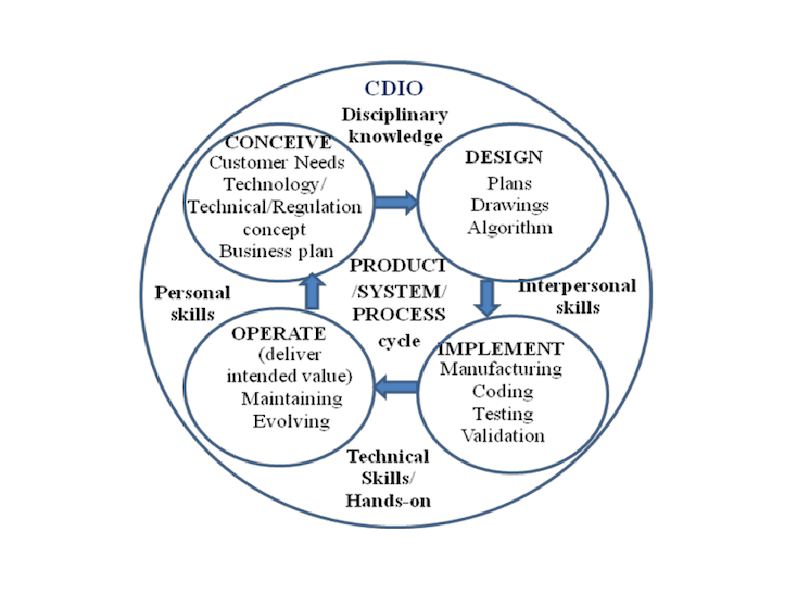
Most of my time in this role was spent at a high level, collaborating with MIT faculty, the research team, and the student success team to shape a new framing for engineering education. My work spanned across 5 engineering programs: 1) energy, 2) nuclear, 3) information technology, 4) biomedical, and 5) space. And across these, the plan was for graduates to have a business foundation in entrepreneurship and innovation. In terms of learning, the program had one goal of creating an interdisciplinary experience and qualifications, along with a second goal of modularizing to some extent learning pathways so that each student could customize their degree program. Through all of this, the approach to learning was guided by the Conceive, Design, Implement, and Operate framework.
Artifacts
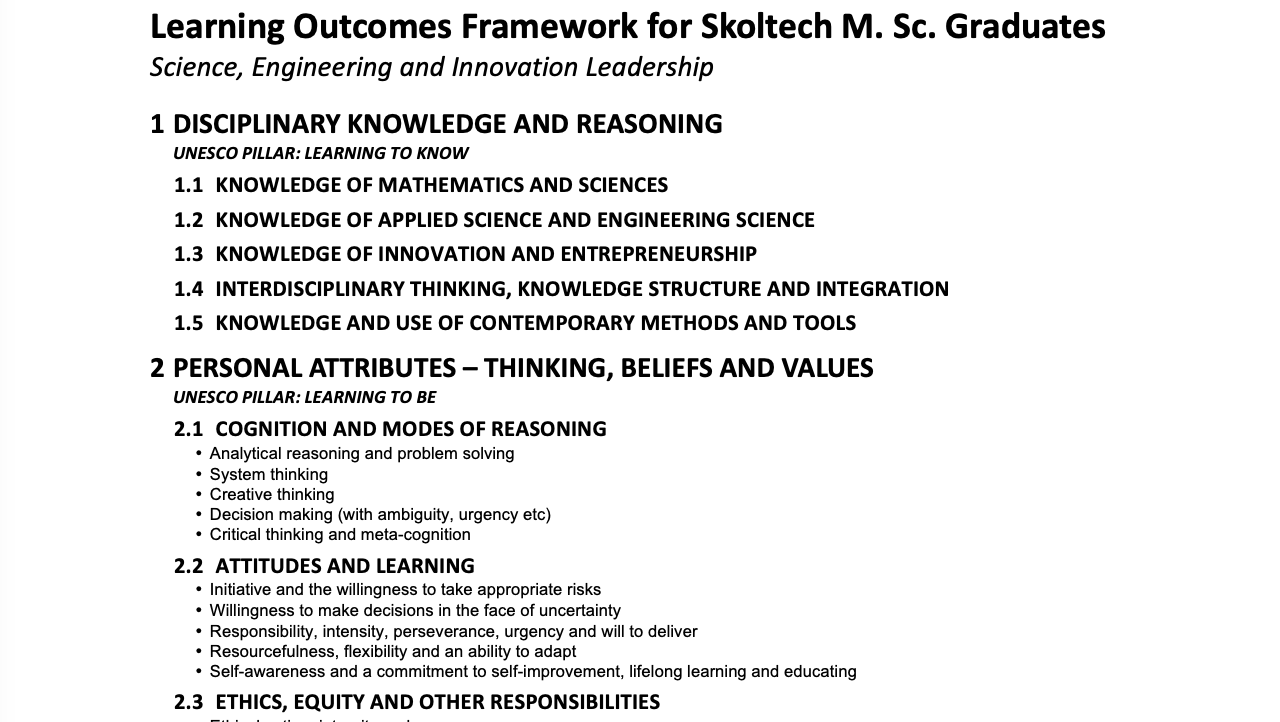
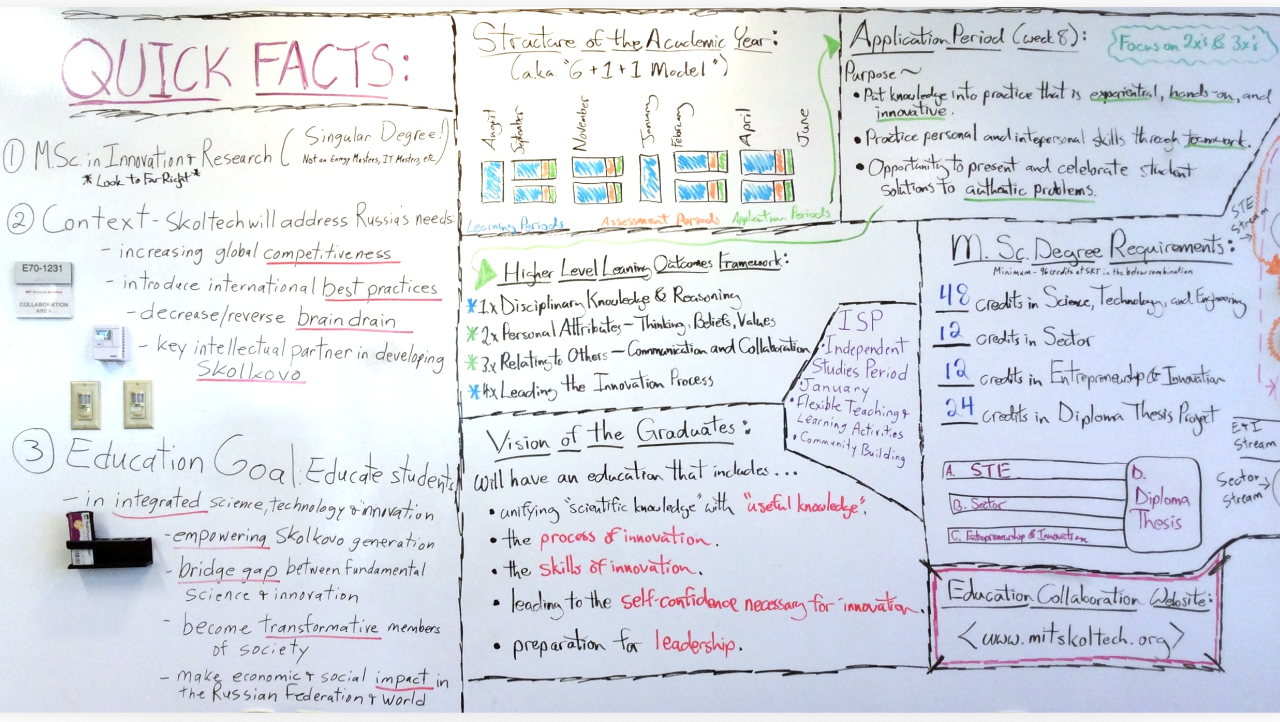
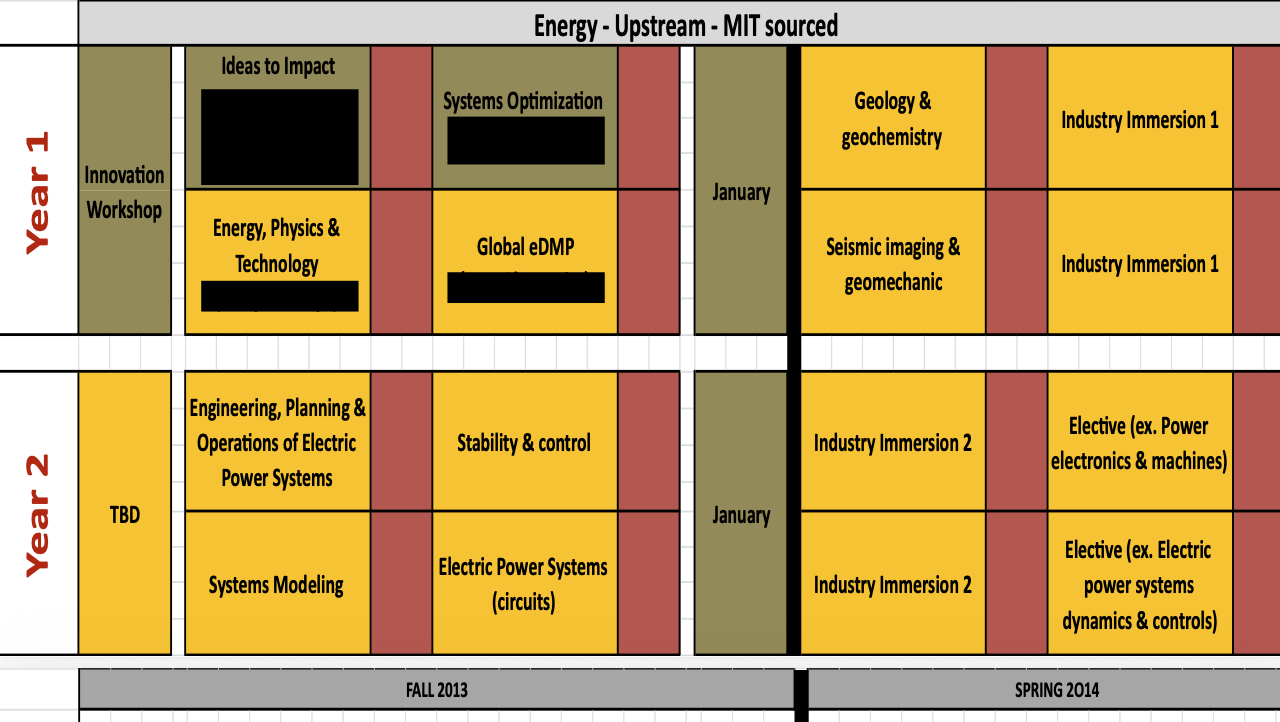
Building a new curriculum is no easy task. You need content experts to tell what should be taught, Instructional Designers to shape content into a cohesive program, and researchers to inform on an array of concerns. One easier part of this curriculum design however was that it was only meant to be delivered in-person. This was intentional because central to the learning was for participants to be hands-on and routinely practicing communications skills. From left to right, the following are provided: 1) the High Level Learning Outcomes Framework that was our primary structural guide, 2) image of a collaborative activity to literally sketch out the vision for education at SKT, and 3) an example of mapped out degree program plans.
Impact
The year that I spent in this program was truly one of a kind. In that time, I laid a foundation for a few in-person courses in the energy, information technology, and biomedical programs. I took the lead with the design and launch of the first Skills Application Period in collaboration the MIT Media Lab and the Writing and Communication Center. And I created a seminiar series for teaching ethics in engineering research and administrative bits such as the course proposal process.
It was a one of a kind experience that I don't expect to have again. More than the work I was inspired and saw the scale of impact I could have in designing learning experiences.