Overview
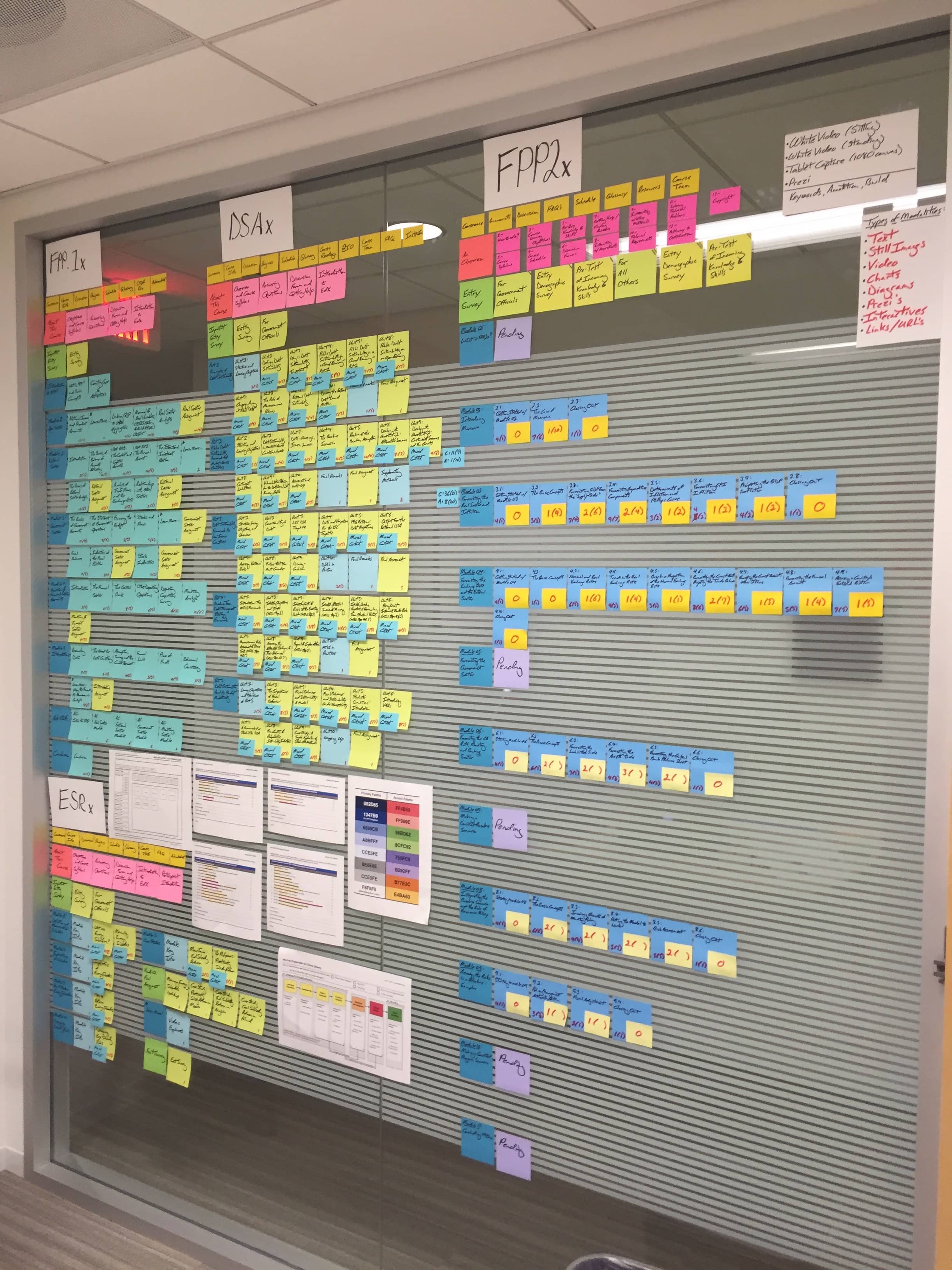
When I joined the IMF in the fall of 2024, I entered a program that was a little less than 1 year old. In that time, two staff members working with multiple economists and a part-time instructional design consultant created a single Massive Open Online Courses. It was a start, but it reflected the courses offered on an internal Moodle delivery system at the time. My role was to help build more MOOCs, design a vision, and ultimately, transform the learning operation with others.
In order to enable all instructional and media development, there was a need to develop a strong project management system and clear workflows. This wasn't immediate and took multiple iterations to get right. But working with a pair of program managers, I was able to design the learning operations that could adjust as the team grew and ultimately enabled us to deliver 3 course per year rather than a single course when I began.
Artifacts
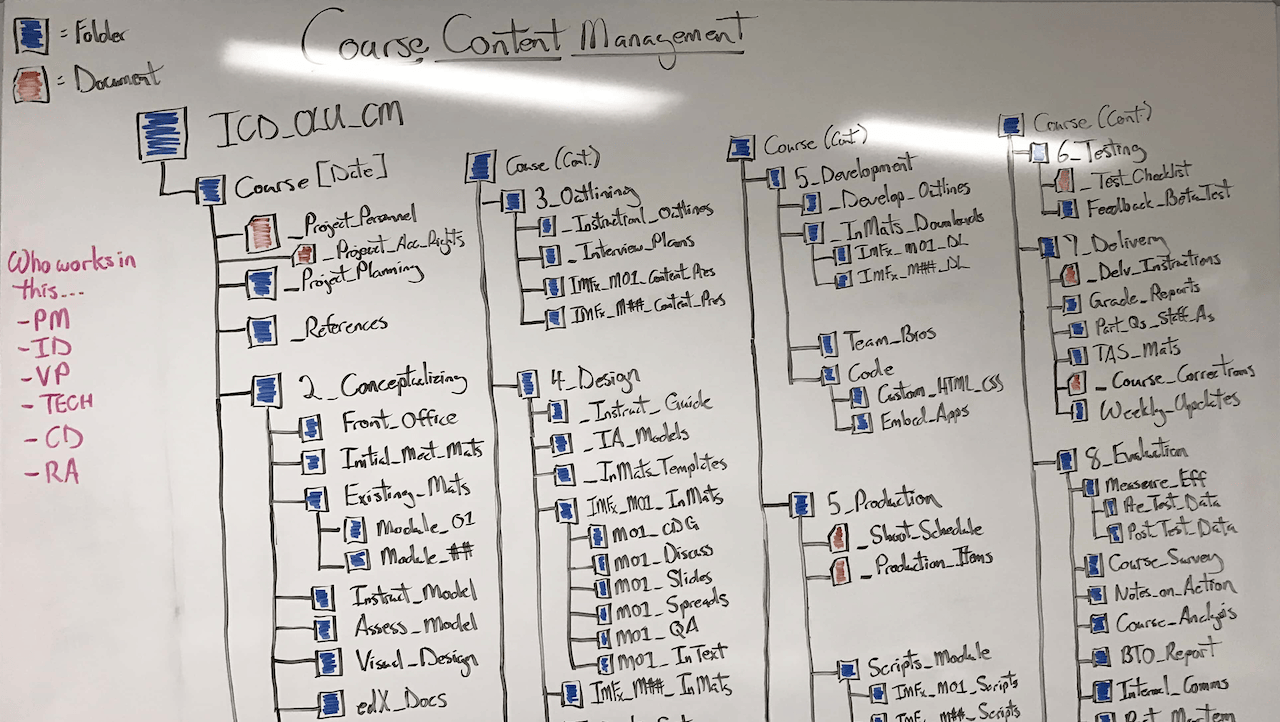
The following are some of the documents I created to both outline, communicate, and guide the flow of online course development projects. At the time, we did not use work management and project tracking platforms like Monday.com, Asana, or Jira. Instead, we relied on a series of spreadsheets, checklists, and visual references such as kanban boards and stickies on walls.
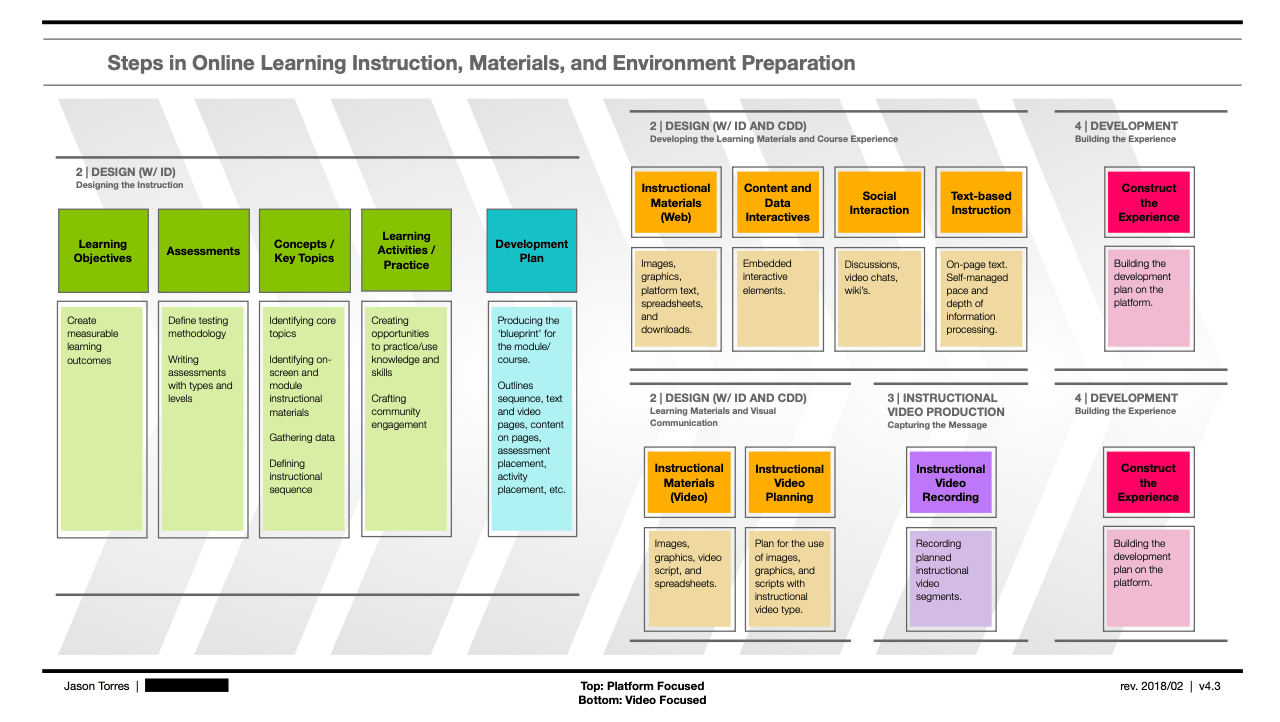
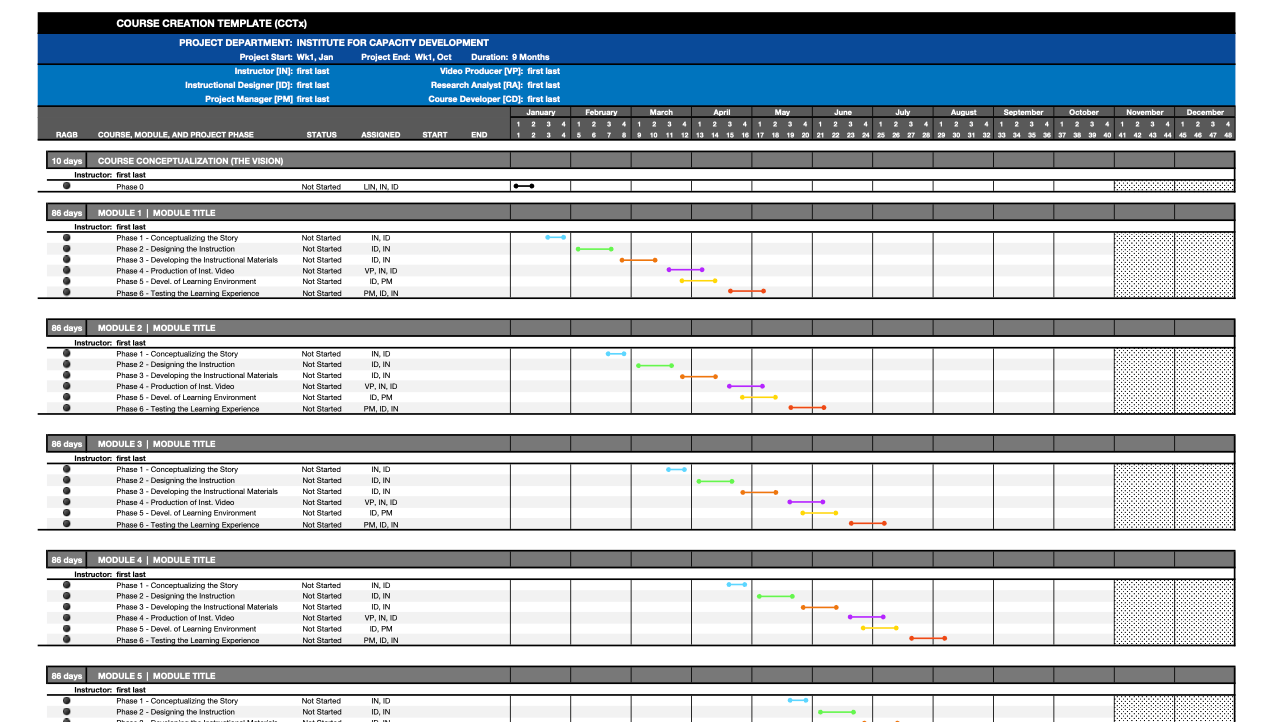
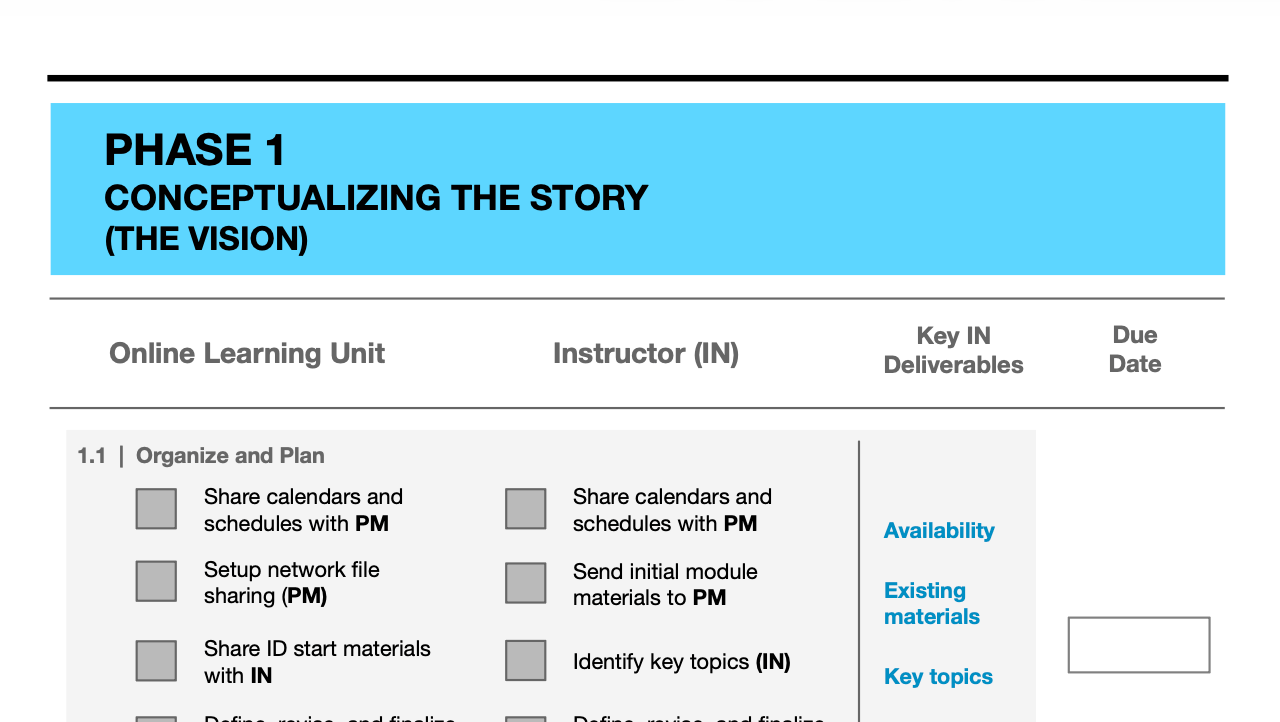
From left to right, I created the following to help standardize and make our project work effective:
- A roadmap for developing modules with and without creative professionals;
- A 9 and 10 month project timeline;
- A series of 6 phases and checklist for collaborative course development; and
- A file and folder management system for shared cloud storage.
Impact
I mapped the system and took a lot of care with it, but making it really work took the whole team of program managers, creative professionals, and subject matter experts. Being an organization driven by economists, the one word that resonated with everything we did was efficiency. In the end, we did this really well with a small team and as we interlinked with other design teams in the IMF Creative Lab. Because of how well the end system worked we were able to increase course deliveries by 200%. This included holding multiple design meetings per week, creating custom HTML/CSS for the LMS, and producing hours of high-quality video.